July 23, 2007

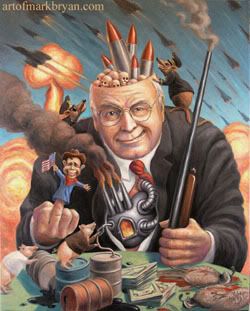
Don’t Fear the Reaper

Filed under: Dick Cheney — moonbat @ 11:20 pm

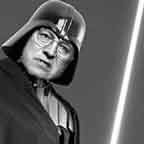
Darth CheneyWhile the psycho-pathologies of our President have become frighteningly evident over the last few years, those of the man “who decides what the Decider decides” are still very much cloaked from public view, presumably in an undisclosed location. Susan Douglas explains in Is Cheney Evil or Just a Weasel?, that when we liken Dick Cheney to evil itself (or dress him up in a black robe with a light sabre), we affirm his power as a bully, instead of undermining it.

With profuse apologies to Blue Oyster Cult.

Spotlight

June 28, 2007

The Devil and Dick Cheney

Filed under: Bush Administration, Dick Cheney, criminal justice, corruption — maha @ 11:18 am

You know the Veep is in trouble when he’s lost David Broder. “[W]hen presidential candidate George W. Bush chose Dick Cheney as his running mate, I applauded the choice. … Boy, was I wrong.”

Truly, there’s not much lower Dick can sink. I checked to see if Hugh Hewitt had turned on him yet — that would be, I think, absolute rock bottom — but I found no recent Hewitt postings on Cheney. Yet. Even really stupid rats will get off the sinking ship before they drown.

Do a news google for “impeach Cheney” and you get an eyeful. Coming at a time when the Bush Administration faces mutiny over immigration, it can truly be said the White House is (finally) under siege from all sides. Some parts of the Republican Party are still trying to provide a buffer, of course, but the GOP is starting to look like the last defenders of the Bastille.

Raw Story reports that this morning the White House asserted “executive privilege” and said it would not turn over documents related to the firings of federal attorneys. I believe we’re still waiting for a response to yesterday’s subpoenas regarding the warantless wiretap program.

My understanding is that if the Administration refuses to comply with subpoenas from Congress, Congress has to go to a federal court to get the subpoenas enforced. If a court rules the Administration must comply, the White House can appeal, and fish around for federal judges who will allow them to continue to operate outside the law. That’s how the Dickster was able to avoid turning his energy task force records over to the General Accounting Office, for example.

I assume the White House can appeal this all the way to the Supreme Court. Yeah, that’s so … not reassuring. Judging in part by how the voting went in Bush v. Gore, in which Kennedy, O’Connor, Rehnquist, Scalia and Thomas voted to stop the recounts, I can see the votes falling the same way they did during the recent Carhart decision — Kennedy, Alito, Roberts, Scalia, and Thomas supporting the White House; Breyer, Ginsburg, Souter and Stevens upholding the law.

Right now, this nation is as close to totalitarianism as it has ever been. Closer, probably.

What if the White House exhausts all appeals and still refuses to turn over the subpoenaed documents? I honestly don’t know what the next step might be. I’m not sure that’s ever happened before. How might they be forced to comply? There have been many times in American history in which some or all of the three branches of government were at odds with each other, but the extreme behavior of the Bush Administration is taking us into uncharted territory.

An appeal process could drag on for months. The Bushies might run out the clock. Or, if it is resolved late next year, Congress might decide to spare itself from sending law enforcement agents into the White House to enforce the subpoenas.

Even so, I sincerely hope all appearances of criminal behavior will be investigated, and the perps brought to justice eventually. As long as it takes. That means it’s essential to seek no pardon pledges from all our Democratic presidential candidates.

And, David Broder — shut up and listen to us dirty bleeping hippies next time, OK?

Essential reading — don’t miss Sidney Blumenthal’s essay, “The imperial vice presidency,” in Salon today. See also “Impeach Cheney: The Vice President Has Run Utterly Amok and Must Be Stopped” by Bruce Fein in Slate and “Cheney and the National Security Secrets Fraud” by Scott Horton at Harper’s.

Also — I realize Rep. Dennis Kucinich introduced articles of impeachment against Cheney last April. Does anyone have a link to the exact document that Kucinich submitted to the House? I ran into one commenter who said that Kucinich’s bill, while well-intentioned, did not introduce the strongest reasons to impeach Cheney. I’d like to read it myself before I comment.
Spotlight

June 26, 2007

The Freak Show

Filed under: Health Care, Republican Party, News Media, Dick Cheney — maha @ 8:49 am

Believe it, or not: Watch Mitt Romney speak about health care for one minute and nineteen seconds and say not a single thing that’s true.

On the plus side — David Schuster, filling in for Tucker Carlson, demonstrates the right way to conduct an interview.

Spotlight

June 21, 2007

Then What the Hell Is It?

Filed under: Bush Administration, Dick Cheney — maha @ 4:29 pm

From the House Committee on Oversight and Government Reform:

The Oversight Committee has learned that over the objections of the National Archives, Vice President Cheney exempted his office from the presidential order that establishes government-wide procedures for safeguarding classified national security information. The Vice President asserts that his office is not an “entity within the executive branch.”

Dick: There are three branches of government. Those are the executive, the legislative, and the judicial. The Constitution puts the Vice President’s office in the executive branch. If you aren’t part the executive branch, then what branch do you think you are in?

Please, Dick, answer the question. This is fascinating. I really want to know what you think.

As described in a letter from Chairman Waxman to the Vice President, the National Archives protested the Vice President’s position in letters written in June 2006 and August 2006. When these letters were ignored, the National Archives wrote to Attorney General Alberto Gonzales in January 2007 to seek a resolution of the impasse. The Vice President’s staff responded by seeking to abolish the agency within the Archives that is responsible for implementing the President’s executive order.

I want to reassign the lot of them to this branch.

Spotlight

June 2, 2007

Two Editorials

Filed under: Bush Administration, Dick Cheney — maha @ 10:08 pm

An editorial in Sunday’s New York Times tears Dick the Dick a new one –

The Associated Press reported that Mr. Cheney’s office ordered the Secret Service last September to destroy all records of visitors to the official vice presidential mansion — right after The Washington Post sued for access to the logs. That move was made in secret, naturally. It came out only because of another lawsuit, filed by a private group, Citizens for Responsibility and Ethics in Washington, seeking the names of conservative religious figures who visited the vice president’s residence.

This disdain for accountability is distressing, but not surprising. Mr. Cheney has had it on display from his first days in office, when he refused to name the energy-industry executives who met with him behind closed doors to draft an energy policy.

In a similar way, Mr. Cheney seems unconcerned about little things like checks and balances and traditional American notions of judicial process. At one point, he gave himself the power to selectively declassify documents and selectively leak them to reporters. In a recent commencement address, he declaimed against prisoners who had the gall to “demand the protections of the Geneva Convention and the Constitution of the United States.”

Mr. Cheney is the driving force behind the Bush administration’s theory of the “unitary executive,” which holds that no one, including Congress and the courts, has the power to supervise or regulate the actions of the president. Just as he pays little attention to old-fangled notions of the separation of powers, Mr. Cheney does not overly bother himself about the bright line that should exist between his last job as chief of the energy giant Halliburton and his current one on the public payroll.

From 2001 to 2005, Mr. Cheney received “deferred salary payments” from Halliburton that far exceeded what taxpayers gave him. Mr. Cheney still holds hundreds of thousands of stock options that have ballooned by millions of dollars as Halliburton profited handsomely from the war in Iraq.

Every now and then someone will bring up the stock option issue, and it gets slapped down almost immediately. In any other administration this would be a major scandal. But with the Bushies it barely qualifies as background noise.

Another editorial in the Times discusses the shocking and growing backlog of disability claims submitted by our troops –

Whenever and however American troops withdraw from Iraq, a flood of wounded and psychologically damaged veterans will present the nation for decades to come with costly needs that already are overwhelming government services.

The backlog of disability claims stands at more than 405,000, with cases averaging 177 days to be processed — almost twice the backlog for civilians. Experts estimate that an additional 400,000 claims will be filed in the next two years. …

… Clearly, the administration has failed in more than its battle strategy in Iraq and Afghanistan. While talking a lot about supporting the troops and using them shamelessly in Congressional battles and election years, the administration has systematically shortchanged the wounded and maimed who make it back from harm’s way. The nation has a moral obligation to help them face a whole new challenge of survival.

Snark away.

Spotlight

April 27, 2007

Tenet Talks

Filed under: Bush Administration, Iraq War, Dick Cheney, War on Terror — maha @ 9:21 am

Former CIA Director George Tenet’s hotly anticipated book about What He Did to Get Us Into War will hit the shelves on Monday, and the New York Times has an advance copy. Scott Shane and Mark Mazzetti write,

George J. Tenet, the former director of central intelligence, has lashed out against Vice President Dick Cheney and other Bush administration officials in a new book, saying they pushed the country to war in Iraq without ever conducting a “serious debate” about whether Saddam Hussein posed an imminent threat to the United States.

The 549-page book, “At the Center of the Storm,” is to be published by HarperCollins on Monday. By turns accusatory, defensive, and modestly self-critical, it is the first detailed account by a member of the president’s inner circle of the Sept. 11, 2001, terrorist attacks, the decision to invade Iraq and the failure to find the unconventional weapons that were a major justification for the war.

“There was never a serious debate that I know of within the administration about the imminence of the Iraqi threat,” Mr. Tenet writes in a devastating judgment that is likely to be debated for many years. Nor, he adds, “was there ever a significant discussion” about the possibility of containing Iraq without an invasion.

Well, OK, so we knew that. But it’s nice to have corroboration.

Tenet admits to making the famous “slam dunk” remark that Bob Woodward wrote about in one of his books. But he says it was taken out of context and, in any event, played no part in the decision to go to war.

Mr. Tenet described with sarcasm watching an episode of “Meet the Press” last September in which Mr. Cheney twice referred to Mr. Tenet’s “slam dunk” remark as the basis for the decision to go to war.

“I remember watching and thinking, ‘As if you needed me to say ‘slam dunk’ to convince you to go to war with Iraq,’ ” Mr. Tenet writes.

As violence in Iraq spiraled beginning in late 2003, Mr. Tenet writes, “rather than acknowledge responsibility, the administration’s message was: Don’t blame us. George Tenet and the C.I.A. got us into this mess.”

Shane and Mazzetti say that Tenet portrays President Bush “in a largely positive light” but is much less kind to Cheney, Wolfowitz, Feith, and others who, before and after 9/11, largely ignored al Qaeda because they were obsessed with Saddam Hussein. Tenet also settles some scores with Condoleezza Rice and Stephen Hadley.

And Tenet corroborates what many former Clinton Administration officials said about the Bushies ignoring warnings that al Qaeda was really, truly dangerous and needed to be made a high priority.

The book recounts C.I.A. efforts to fight Al Qaeda in the years before the Sept. 11 attacks, and Mr. Tenet’s early warnings about Osama bin Laden. He contends that the urgent appeals of the C.I.A. on terrorism received a lukewarm reception at the Bush White House through most of 2001.

“The bureaucracy moved slowly,” and only after the Sept. 11 attacks was the C.I.A. given the counterterrorism powers it had requested earlier in the year.

There’s a bit more background about the book and the “slam dunk” remark in this Washington Post article.

Update: Paul Kiel writes,

George Bush insulates himself from reality! The administration didn’t seriously entertain the notion that Iraq didn’t have WMD’s! Dick Cheney is an asshole!

OK, so the revelations in George Tenet’s new book aren’t going to shock anyone, but they are notable considering the source.

Yeah, pretty much. There was some hope Tenet would reveal something new, but it doesn’t seem that he did.

Spotlight

February 7, 2007

Libby, Libby, Libby

Filed under: Bush Administration, Dick Cheney — maha @ 9:22 pm

I take it some significant stuff happened at the Scooter Libby trial today. I’m still trying to take it in, as I was focused elsewhere most of the day. But it appears Scooter is toast. Lots of updates at firedoglake.

Chris Matthews has finally figured out that the story about Joe Wilson being sent to Niger by his wife was a red herring tossed by Cheney’s office to discredit Joe Wilson. He should have gotten that straight three and a half years ago, but better late than never.

The trial so far has pictured Dick the Dick as the instigator of the plot against the Wilsons. Dan Froomkin writes that the testimony

…gives credence to the widespread view that Vice President Cheney oversees his own intensely secretive, highly defensive and sometimes ruthless operation within the White House — and that he does so with President Bush’s approval, but often outside the view of Bush’s top aides.

Spotlight

February 1, 2007

Pawns

Filed under: Bush Administration, Valerie Plame, Dick Cheney — maha @ 3:16 pm

I haven’t been blogging about the Libby trial, because other bloggers closer to the action are blogging everything that needs to be blogged. But I do recommend Sidney Blumenthal’s “How Libby Became Cheney’s Pawn” as a nice refresher on what the trial is about.

Spotlight

January 23, 2007

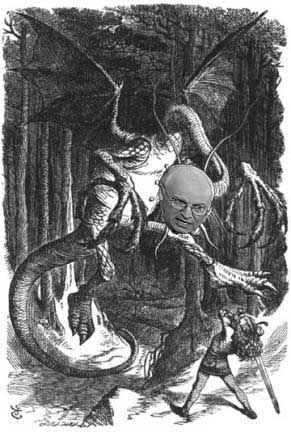
Slaying the Jabberdick

Filed under: Bush Administration, Dick Cheney — maha @ 3:41 pm

From Think Progress:

Under oath, Vice President Cheney’s former chief of staff Scooter Libby told a grand jury that he first learned that Joe Wilson’s wife, Valerie Plame, was a CIA agent from conversations with the media. In fact, he first learned that information from Vice President Cheney himself. …

– “Vice President Cheney himself directed Scooter Libby to essentially go around protocol and deal with the press and handle press himself…to try to beat back the criticism of administration critic Joe Wilson.”

– Cheney personally “wrote out for Scooter Libby what Libby should say in a conversation with Time magazine reporter Matt Cooper.”

– “Scooter Libby destroyed a note from Vice President Cheney about their conversations and about how Vice President Cheney wanted the Wilson matter handled.”

Digby:

Norah O’Donnell is asking Andy Card and Leon Panetta if the president is going to have to ask Dick Cheney to resign as a result of what’s being alleged at the Libby Trial. (They both punted.)

And just think — Dick the Dick is supposed to show up and sit next to Nancy Pelosi at the SOTU tonight. Wheeee!

Spotlight

January 3, 2007

“The Last Regular Republican”

Sidney Blumenthal’s latest column deserves a close reading. It shines a light on another part of our recent political history, when the Republican Party was taken over by the Goldwater-Reagan “pseudo conservative” faction. Further, it shows us how the Bush II Regime tied the Reaganite conservatives back to the Nixonian imperial presidency, giving us the worst of several possible worlds in one toxic White House.

When the late Gerald Ford became President, he chose Nelson Rockefeller as his vice president. And this mightily pissed off the Reagan faction, including Reagan himself. Reagan actually snubbed the President on a visit to Washington.

Reagan’s motive, however, was ultimately personal pique - he was “disappointed that he had been passed over himself,” according to his biographer Lou Cannon. Reagan thought of himself as the rightful heir apparent and Ford as nothing but a “caretaker”.

Ford had a dismally low regard for Reagan, dismissing the threat of his potential challenge. “I hadn’t taken those warnings seriously because I didn’t take Reagan seriously.” Ford considered Reagan “simplistic,” dogmatic and lazy. Reagan, for his part, argued that Nixon’s 1972 mandate was not a Republican victory but an ideological one for junking the old Republicanism and that Ford was betraying it. “The tragedy of Watergate,” Reagan said, was that it “obscured the meaning of that ‘72 election.”

Reagan’s assessment of the 1972 election makes absolutely no sense to me. About the only thing Nixon had in common with Reagan was red- and race-baiting. Nixon was an internationalist who favored détente with the Soviet Union and who visited the other Evil Empire, China. And Nixon had no ideological problem with applying some “big government” solutions to domestic problems. Nixon’s administration established the Environmental Protection Agency, for pity’s sake. I think Reagan was hallucinating.

Reagan accused Ford of fatally weakening national security. He opposed Ford’s pursuit of détente with the Soviet Union through Strategic Arms Limitation Talks that led to treaties reducing the production of nuclear weapons and Ford’s signing of the Helsinki Accords in August 1975, which held the Soviet Union for the first time to standards of human rights. Reagan’s critique appeared against the backdrop of the collapse of South Vietnam and the scene on April 30, 1975, of helicopters evacuating US personnel from the roof of the US Embassy.

Here’s where it gets interesting:

In April 1975, the Senate Operations Committee under the chairmanship of Sen. Frank Church, D-Idaho, released 14 reports on the abuse of intelligence. It chronicled “excessive executive power”, “excessive secrecy”, “avoidance of the rule of law”, “rogue” operations and even spying on domestic politics. “Whatever the theory,” the report concluded, “the fact was that intelligence activities were essentially exempted from the normal system of checks and balances. Such executive power, not founded in law or checked by Congress or the courts, contained the seeds of abuse and its growth was to be expected.”

Meanwhile, Donald Rumsfeld - moved from White House chief of staff to secretary of defense as his deputy, Dick Cheney, was promoted to the chief of staff job - created a Team B of hawks within the Pentagon who attacked the CIA’s National Intelligence Estimate for supposedly underestimating the Soviet Union’s military strength. Rumsfeld began making speeches assailing detente, claiming that the Soviets were flagrantly violating treaties negotiated by Secretary of State Henry Kissinger, another hate object of the right who was long associated with Vice President Rockefeller.

The CIA officially responded by calling the Team B report “complete fiction.” And CIA Director George HW Bush said that Team B set “in motion a process that lends itself to manipulation for purposes other than estimative accuracy.” Nonetheless, Rumsfeld’s inflation of the Red menace, based on faulty data, turned up the flame under Ford. Rumsfeld had his own motive: He wanted to be named vice president, a nomination that in the end went to Sen. Bob Dole, considered acceptable to Reagan.

To appease the Right, Ford pressured Rockefeller not to run as vice president in 1976, an act Ford himself called “cowardly.” Bob Dole would would be Ford’s running mate. Now, get this:

Rockefeller advised Ford: “I’m now going to say it frankly … Rumsfeld wants to be President of the United States. He has given George Bush [another potential vice-presidential choice] the deep six by putting him in the CIA, he has gotten me out … He was third on your list and now he has gotten rid of two of us … You are not going to be able to put him on the [ticket] because he is defense secretary, but he is not going to want anybody who can possibly be elected with you on that ticket … I have to say I have a serious question about his loyalty to you.”

Just think … President Rummy.

Rummy lost his government job when Jimmy Carter was elected. He played some small roles in the Reagan Administration, such as special envoy to the Middle East (1983–1984, during which time the famous Rummy-Saddam handshake took place), but for most of the Reagan years and after Rummy retreated to private industry until Junior brought him back to Washington in 2001. Blumenthal continues,

Cheney and Rumsfeld, since their days in the Nixon White House, had observed the imperial presidency besieged. Under Ford, they saw it reach its low ebb, and they were determined to restore the presidency as they imagined it should be - unchecked by an intrusive Congress, shielded from the press, and unobstructed by staff professionals in the intelligence community who did not clearly understand the present dangers that required just such an executive.

After the 2000 election, Vice President-elect Cheney held a dinner at his house where he held forth that the new administration would finish off Saddam Hussein, a job that the elder Bush had left undone, opening him to charges of softness. Rumsfeld, appointed by the new president as secretary of defense at the suggestion of Cheney, named one of the key members of the Ford-era Team B, Paul Wolfowitz, as deputy secretary. At the first meeting of the National Security Council with Bush, Wolfowitz raised the question of invading Iraq.

And there you have it. Through the Bush II White House, the drown-government-in-the-bathtub Right was tied together with the Nixonian “Executive Power Über Alles” Right. This gives us secretive, oppressive, antidemocratic government that can’t govern. Nice.

Blumenthal writes that “Ford was the last regular Republican to serve as president.” If you’re much younger than I am you may not remember what a “regular Republican” is.

Spotlight
Next Page »