All Politics Is Identity Politics

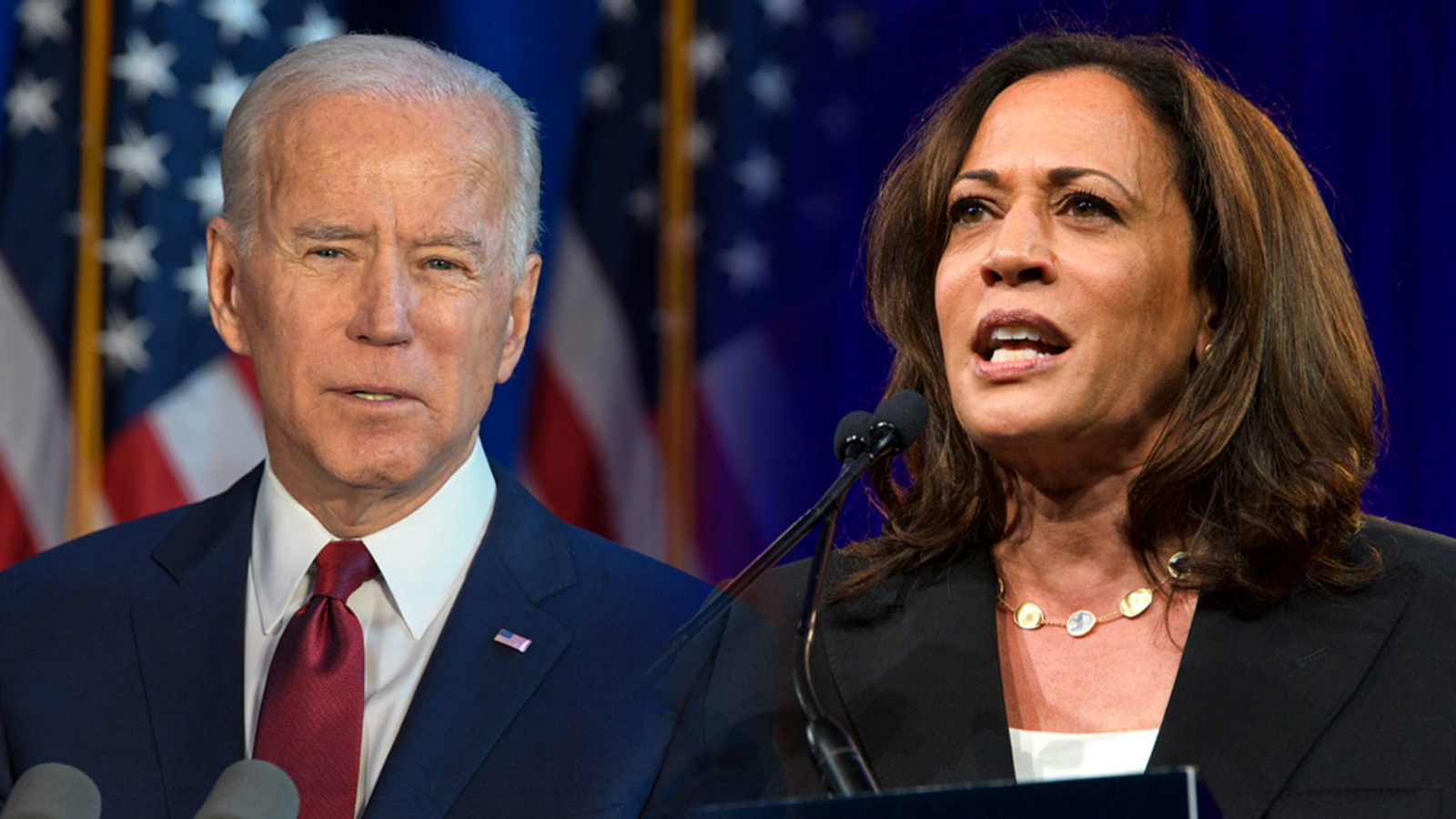
There is a riotously funny article at Reason magazine about Kamala Harris’s racial identity. It’s not meant to be riotously funny, but it is, because the author is such a turd and is so unconcious about it.

In Is Kamala Harris Legally African American, Indian, Both, Neither, or Something Else?, some guy named David Bernstein wastes about 900 words in an utterly anal discussion of Kamala Harris’s “legal” racial identity. He eventually decides that Harris is “legally” African American. Wow. I infer he is obsessed with whatever benefits she receives as some kind of minority that he isn’t getting. And it seems to bother him that Harris is hard to fit into whatever racist conceptual boxes live in his head.

He also mentions that “several commentators” have attacked Harris as not really African American. I take it this is because she gets her blackness from her Jamaican father, meaning none of her ancestors worked on a plantation in Mississippi.

Isabel Togoh writes at Forbes,

Conservative pundit Mark Levin opened his BlazeTV show on Tuesday by making remarks about Harris’ heritage and rejecting claims she would be the nation’s first African American VP: “Her ancestry does not go back to American slavery,” he said.

Jamaican Blacks are the descendents of enslaved Africans taken to Jamaica in the same British slave trade that operated in the British colonies to the north, like Virginia. The transatlantic slave trade took people from from West Africa to the Caribbean, where most were sold to sugar plantations. Raw sugar, and the remaining people, were then taken to the 13 colonies in the north and sold there. The British slave merchants used the profits to purchase goods in North America like furs, firearms, and rum. Some of this merchandise was shipped to Europe, and some was taken to Africa to barter for more people to be sold into slavery. Slavery in Jamaica and Virginia was part of the same trading system, early on. Dude, learn some history.

When Senator Harris was announced to be the vice presidential pick, the Right collectively had a racist-misogynist meltdown. I have yet to see a criticism of the Senator from the Right that wasn’t rooted in racial or gender bias, other than the attempts to paint the moderate and politically mainstream Harris as a far-left loon.

Paul Waldman:

“Biden’s big mistake of course was narrowing his choice on the basis of skin color,” said Laura Ingraham on Fox News. “On Planet Earth that used to be called bias or even racism.”

One could argue that nearly every candidate for president, starting with George Washington, was chosen on the basis of skin color. That color was white. And they’ve all been chosen on the basis of gender, which is male. In a sense, all politics in the U.S. is identity politics, and always has been.

Back to Paul Waldman:

Whatever you think of their policy agendas, we have one party that is diverse and progressive, and growing more so on both counts, and another party that is not only almost all white but is being dragged down by extremists and loons.

Something I didn’t know until I heard it on the teevee last night — the last Democratic presidential candidate to receive the majority of white votes was Lyndon Johnson in 1964. That’s possibly one reason our presidential candidates have struggled. But the percentage of whites among all U.S. voters is shrinking. The Census Bureau projected a couple of years ago that whites would be a minority of the population by 2045. Last year we learned that less than half of U.S. children under age 15 are white. And that’s right now. Our term for today, boys and girls, is majority minority.

Voters of color are the future. The Democratic Party seems, in its lumbering way, to be adjusting to that. The Republican Party is not.

What Democrats — and lefty-leaning voters who are perpetually pissed at Democrats — are struggling to learn, seems to me, is that power comes from supporting each other. I’m sure I’ve written in the distant past of the time in the 1970s and 1980s when the New Left was gone. What remained were a lot of different single-issue organizations competing with each other for donations and attention. There was no cohesion. And the Democrats, who no longer had the old New Deal Coalition to support it, moved right and began to line up after the Republicans to take money from corporations and financial interests. This gave us Clintonism and the Democratic Leadership Council. And so on.

The Democrats are poised to move away from Clintonism and back to the left, which was in fact the Vital Center of many years ago. The generation that came up the ranks with the Clintons is not quite yet with the program, but some of them are learning. I think Joe Biden is learning. That’s a good sign. For the progressive left, Biden is far from the perfect candidate, but I think he is educable. (See The Best Thing About Biden Is His Malleability.) That generation will be gone in another ten years, and by all appearances the next leadership group will be a lot more progressive, assuming the nation survives that long.

And part of the progressive left needs to learn that you get a better seat at the table if you can be trusted to show up and vote for Democrats, even if you don’t get everything you want that election cycle.

Republicans, meanwhile, are acting more and more like a wounded animal, thrashing around and biting at whatever moves. They still win elections. They’ll win a lot of elections in November. But at least some of them must know, or at least feel, that they’re on a trajectory to nowhere. They can’t continue being the party of bigoted white people and expect to survive another forty years. Not without destroying democracy and establishing a right-wing dictatorship, anyway, which some are trying to do.The writing is on the wall, and it says majority minority 2045. If not sooner.

Between now and the general election we’ll see a tsunami of ugliness from the Right. Republicans and their media flunkies cannot speak of Harris without their bigotry showing. It’s not going to help them.
More Brilliant Trump Ideas

Trump has another brilliant idea for juicing up the economy. You will never guess what it is.

He wants to cut the capital gains tax. Yeah, he came out with that today. I’m serious.

He said today he is also “looking at” a lot of tax cuts, including expanding the tax cuts that already have been cut, and a middle-class tax cut. No specifics. But since all of this would have to originate in the House, it ain’t gonna happen, anyway. Trump doesn’t seem to know that, but it ain’t.

Trump’s twitter feed today is full of tweets like this:

Similar congratulations are aimed at several other states — Colorado, Texas, Wisconsin, Florida, Georgia, Michigan, North Carolina, New Hampshire, Pennsylvania, Illinois, Louisiana, New Jersey, Utah, Nebraska, Alabama, Oklahoma. I get the impression Trump discovered some money he had the disgression to disburse without congressional permission. Improved bus service on the way, folks. Just the thing during a pandemic! This seems to not have been on anyone’s radar. And aren’t most of those states either conservative or swing states? Hmm.

We’re now had a few days to digest the Great Signing of four memoranda and one executive order that was supposed to fix everything. Where are we with that?

Let’s start with the $400 supplement for unemployment benefits. I direct you to this article in Forbes by Shahar Ziv. Here’s what he says:

Of that benefit, $300 is supposed to come from the Department of Homeland Security’s Disaster Relief Fund (DRF). States have to add $100, supposedly from their allocation of the Coronavirus Relief Fund (CRF). But the states are saying that they don’t have that money any more. All the CRF funds are allocated, earmarked, or spent. Not all have weighted in, but I have yet to hear of one state saying yeah, we can do that. So according to the current terms, nobody gets any money. Mnuchin has hinted that Trump could waive the requirement for states to put in $100, but Trump himself hasn’t addressed that.

Further, the DRF funds probably won’t last long even if allocated. According to Ziv:

Trump’s order looks to leverage money in Homeland Security’s Disaster Relief Fund, which currently has $70 billion available. His action states that the increased benefits will be available “for eligible claimants until the balance of the DRF reaches $25 billion or for weeks of unemployment ending not later than December 6, 2020, whichever occurs first, at which time the lost wages assistance program shall terminate.”

According to expert estimates, the money in the DRF may only last four to five weeks before expiring, a far cry from the December 6, 2020 date in Trump’s executive order. At that time, the White House would probably need to look to Congress and legislative action to continue benefits.

There are also legal questions about whether Trump can allocate the DRF money as he intends. Legal experts are not all in agreement, but a big chunk of them think the whole plan is illegal. However, I doubt anyone will bother to challenge it in court, because it probably won’t happen anyway.

Going back to the desperate situation of the states, get this:

Senate Majority Leader Mitch McConnell’s refusal to provide coronavirus relief to cities and states facing massive budget shortfalls due to the pandemic could deal a devastating blow to the economic recovery, leading to millions of job losses.

Moody’s Analytics told the Wall Street Journal on Wednesday that if Congress does not agree to give more aid to cities and states, the economy would contract by 3% and more than 4 million jobs could be lost.

The ball is in your court, Mitch.

Then there is the payroll tax deferment. Joseph Zeballos-Roig at Business Insider writes that it’s possible few workers will see any extra money in their paychecks, because it’s likely a lot of employers will hang on to that money so that they can pay it back to the IRS when the deferment period ends. And, of course, the deferment isn’t going to people who aren’t getting paychecks.

The remaining memorandum defers student loan payments from October 1 to the end of the year. There are many complaints that isn’t enough. And the one and only actual executive order doesn’t do anything. It merely directs HHS Secretary Alex Azar and CDC Director Robert Redfield to “consider” whether there should be a continued ban on evictions from properties with federally backed mortgages, and if so, how such a ban would work. Don’t hold your breath, in other words.


Maybe We Need to Rethink Voting by Mail

On election night 2016 I was camped out by the teevee with my trusty laptop. I had set up an Excel file so that I could quickly monitor the Electoral College tally as states were called. I had figured which states were “pre-ordained” for both candidates and which were not and had these in separate columns. And as states were called, it soon became clear that Clinton was in trouble. Somewhere between 9:30 and 10:00 central time the column tallies were telling me Hillary Clinton could not possibly win.  The race was called by media a little before 2 am EST, but it by then it had been obvious for hours that Clinton had lost.

As much as I want a cathartic night in which Trump is crushed in a single evening, that’s probably not going to happen this time. And the reason for that is partly illustrated by the 2018 midterm vote. On election night I was disappointed that the hoped-for blue wave hadn’t materialized. But over the next few days we learned that Dems actually had done pretty darn well. Matt Yglesias:

The narrative that congealed election night before polls had even closed on the West Coast was that while Democrats may have taken the House, they also underperformed relative to expectations and the hoped-for blue wave had turned into, in the words of columnist Nick Kristof at the New York Times, “only a blue trickle.”

This was a questionable interpretation at the time it was offered, but subsequent events have shown it to be almost entirely a psychological illusion based on timing.

Like in any election, Democrats both won some squeakers and lost some squeakers. They overperformed expectations in some races and underperformed them in others. And in 2018, it happens to be the case that Democrats got some of their most disappointing results in East Coast states with early closing times, while the GOP’s biggest disappointments came disproportionately in late-counting states.

Consequently, what felt to many like a disappointment as of 11 pm Eastern time on election night now looks more and more like a triumph.

It’s worth reading Yglesias’s column all the way through, because a lot of it applies to what we’re about to experience in November. For example, he wrote, states with the earliest poll closings tend to be red; states with late poll closings and a lot of mail-in votes to count tend to be blue. It is possible — nay, probable — that the early votes reported on November 3 will favor Trump, even if he goes on to lose. And with a whole lot more people voting by mail than ever before, it could be a few days before we know the winner.

At The Atlantic, David Graham calls the phenomenon of late Democratic victories the “blue shift.”

This sort of late-breaking Democratic vote is the new, though still underappreciated, normal in national elections. Americans have become accustomed to knowing who won our elections promptly, but there are many legitimate votes that are not counted immediately every election year. For reasons that are not totally understood by election observers, these votes tend to be heavily Democratic, leading results to tilt toward Democrats as more of them are counted, in what has become known as the “blue shift.” In most cases, the blue shift is relatively inconsequential, changing final vote counts but not results. But in others, as in 2018, it can materially change the outcome.

Although it is slowly dawning on the press and the electorate that Election Day will be more like Election Week or Election Month this year, thanks to coronavirus-related complications, the blue shift remains obscure. But the effect could be much larger and far more consequential in 2020, as Democrats embrace voting by mail more enthusiastically than Republicans.

And here’s the problem:

If the public isn’t prepared to wait patiently for the final results, and if politicians cynically exploit the shifting tallies to cast doubt on the integrity of the vote, the results could be catastrophic.

Again, this is almost certain to happen. So we need to be prepared, and we need to do whatever we can do to prepare the public for this.

Imagine that as November 3, 2020, ticks away, President Donald Trump holds a small lead in one or more key states such as Pennsylvania—perhaps 10,000 or 20,000 votes—and seems to have enough states in his column to eke out an Electoral College win. Trump declares victory, taunts Joe Biden, and prepares for a second term. But the reported results on Election Night omit tens of thousands of votes, including provisional ballots and uncounted mail-in votes. Over the coming days, as those votes are counted, Trump’s lead dwindles and eventually disappears. By the end of the week or early the next, Biden emerges as the clear victor in Pennsylvania—and with that win, captures the race for the presidency.

If that’s how things unfold, Trump is unlikely to take defeat snatched from the jaws of victory graciously. He has already spent months attempting to delegitimize the election system. So imagine that he instead cries fraud and insists he’s the target of a criminal Democratic coup. What if he encourages his supporters to take to the streets, where there are violent clashes between partisans? He might even urge the Republican-led Pennsylvania General Assembly to submit a slate of Trump-backing electors, citing the Election Day returns, even if the full tally clearly shows Keystone State voters chose Biden.

The only way that’s not going to happen is if the results are such a landslide that it’s obvious on election night, or some time the next day, that Biden is the winner. But the longer the vote count drags out, the more likely Trump will find a way to seize another term even if he, eventually, clearly loses the election.

Aaron Rupar at Vox:

Imagine this election night scenario: With a decisive number of mail ballots yet to be tallied, President Donald Trump enjoys a narrow lead over Joe Biden. But before all the votes can be counted — a process that could take days — Trump declares victory, citing purported irregularities with mail-in votes.

You can even picture Trump insisting that the preliminary election night tally must stand as final with a tweet that reads similarly to this one he posted in November 2018, when Florida’s US Senate and gubernatorial elections were still undecided:


So, yeah, that’s what he will do. He’s done it before.

“That is my nightmare scenario,” said Paul Gronke, professor of political science at Reed College in Portland and director of the Early Voting Information Center. “We gotta slow down. Trump’s gonna be tweeting, the media, you, all of your counterparts, have to slow down. Because he’ll claim victory, or he’ll start to claim malfeasance and fraud, lawyers will be climbing into airplanes and arriving in all these small jurisdictions, and it will be not good.”

And you know that if it turns out that Democrats take leads based on mail-in ballots, Trump and the rest of the Republican party will be crying foul. It’s also entirely possible that the team of Trump cronies now running the Postal Service will manage to lose a whole lot of ballots, or else see to it that they are not postmarked or delivered properly.

And this takes us to Jamelle Bouie in today’s New York Times:

The only way to prevent this scenario, or at least, rob it of the oxygen it needs to burn, is to deliver an election night lead to Biden. This means voting in person. No, not everyone will be able to do that. But if you plan to vote against Trump and can take appropriate precautions, then some kind of hand delivery — going to the polls or bringing your mail-in ballot to a “drop box” — will be the best way to protect your vote from the president’s concerted attempt to undermine the election for his benefit.

He’s right.

Trump is desperate to hold on to power, but he probably can’t win a fair fight. His solution, then, is to do everything in his power to hinder the opposition and either win an Electoral College majority or claim victory before all the votes have been counted.

A key element of Trump’s strategy is to undermine the Postal Service’s ability to deliver and collect mail. The president’s postmaster general has removed experienced officials, implemented cuts and raised postage rates for ballots mailed to voters, increasing the cost if states want the post office to prioritize election mail. And Politico reports that Trump’s aides and advisers in the White House have been searching for ways to curb mail-in voting through executive action, “from directing the Postal Service to not deliver certain ballots to stopping local officials from counting them after Election Day.” …

…Earlier this year, a group of more than 100 people — Republicans, Democrats, senior political operatives and members of the media — gathered to role play the November election, using predetermined rules and procedures. “In each scenario other than a Biden landslide,” writes Nils Gilman of the Berggruen Institute, who helped organize the exercise, “we ended up with a constitutional crisis that lasted until the inauguration, featuring violence in the streets and a severely disrupted administrative transition.”

There you have it. To head off the worst outcomes, Trump must go down in a decisive defeat. He’s on that path already. The task for his opponents is to sustain that momentum and work to make his defeat as obvious as possible, as early as possible. The pandemic makes that a risk, but it’s a risk many of us may have to take.

See also Andy Kroll at Rolling Stone. There are steps the states could take to make the mail-in ballots more secure and the counting faster, but that would cost money the states don’t have right now. This is probably a major reason Republicans don’t want to include more money for states in future pandemic relief bills.

We all need to think hard about this. People with health vulnerabilities in high-risk areas may have no choice but to vote by mail, and that’s understandable. But otherwise I strongly urge everyone to consider voting in person, if you can.

America in Free Fall

Here’s an op ed by Crispin Hull from the Canberra Times, We are witnessing the fall of a great power. That would be the United States. I mostly agree with is, although I have quibbles about one section. It begins:

Just how rotten is the United States’ political system? The answer is rotten, as in it will only take a small kick for the whole edifice to fall in, let alone a big kick like COVID-19.

Then we have some passages about the past falls of great powers. There is a strong tendency in long-established powers to ignore warning signs and assume that the nation will right itself when faced with multiple crises. This section reminded me of some passages from Paul Krugman’s 2003 book The Great Unraveling, which criticized the George W. Bush administration. He described the Bush II Republicans as revolutionary powers that did not accept the legitimacy of long-established norms and were working to destroy the nation from within, and of course they’ve gotten worse since.

Hull continues,

Look at the US now. Its president is so psychiatrically disordered with narcissism that he is incapable of dealing with the COVID-19 crisis in a coherent, empathetic way. Everything he says and does is through a prism of himself. He has now turned his whole re-election campaign into one of race hate, law and order and a bizarre invention of a threat from “left-wing fascists”.

Can’t argue with that.

But worse, the US seems to have a national self-delusion that once Trump loses and is gone, everything will return to normal. The delusion extends to a belief that the COVID-19-stricken economy will bounce back to normal in a V shape.

A whole lot of us know better, actually, although many citizens who are not politics nerds probably don’t grasp what we’re in for.

Here’s the section that falls short:

The underlying weakness in present US democracy is that partisanship has become so extreme that the nation is incapable of dealing with the major issues that face it. COVID-19 has illustrated that starkly, with every word and act predicated on party allegiance. Meanwhile, other problems like race, police violence, gun control, inequality, the health system, climate change and energy policy go unattended.

There are two underlying weaknesses in the U.S. that have been eating at it for a long time. One is that there is just too damn much wealth. Over time — especially since the 1970s but arguably since World War II —  the whole country has been corrupted into a vast machine creating more wealth for the wealthy. I guess it was always assumed there would be enough crumbs to keep the proles happy.

The U.S. middle class has been shrinking since 1971. Income and wealth inequality in the United States is substantially higher than in almost any other developed nation, and it is on the rise, it says here. There are communities so impoverished they might as well be in a third-world country.

Much of the middle and working class has gone along with this because it was happening slowly enough that people didn’t see it happening. Or they didn’t see it until it happened to them. The rise of two-income families enabled people to maintain a standard of living that one salary used to support.

The other underlying weakness is our great original sin, racism. This is the great wedge issue that has pushed middle- and working-class whites into voting against their own interests for years. The Jim Crow laws that blocked Black Americans from normal participation in the economy held economic growth back, especially in the South. In the early 20th century the Ku Klux Klan kept union organizers out of the South, because unions were associated with eastern Europeans. In the 1950s and 1960s, hysteria over school integration turned a big chunk of white Americans against the whole idea of public schools, and our schools have suffered. When Lyndon Johnson enacted the Great Society program that, basically, extended the New Deal to help African Americans, suddenly whites who owed their own financial status to the New Deal turned against “government programs.” And so on.

Racism is the deep poison that we’ve never been able to cure, and it’s still central to the partisanship that Hull talks about. It’s racism more than anything else that has enabled right-wing politicians to enjoy the support of poor and working-class whites, even though the political Right in the U.S. offers them nothing but hurt.

See my recent post Missouri and Medicaid — it was the poor rural folks who have no insurance, whose hospitals are closing, who turned out to vote against Medicaid. And a big reason for that is that they got glossy postcards warning them that Medicaid would give free healthcare to illegal immigrants.

Are both parties equally guilty of feeding partisanship? In some ways yes, in some ways no. The Republican Party turned itself into nothing but a corrupt machine in support of more corruption, exploitation, and inequality. But Democrats failed to put itself on the side of poor and working-class folks and instead became a party supported mostly by urban, college-educated upscale professionals. The Dems for too long tried to find a middle ground, supporting policies that at least wouldn’t piss off Big Money while carving out some benefits for the little people. It abandoned the rural poor entirely. And let’s not get started on the ways the Obama Administration failed to hold accountable the people who caused the 2009 financial crash.

So it was that we went into 2016 with the Democratic Party faithful certain that the nation was doing well, or at least heading in the right direction. But they were seriously out of touch. (See my 2016 post, Resist the Return to Normalcy.)

And partisanship? The Democrats too long negotiated with themselves to appease the Right and otherwise worshiped at the altar of “reaching across the aisle,” even after years of having their hands bitten as they reached. Even during the recent Democratic nomination debates, half of those Dem promised to “reach across the aisles.” Including our nominee, Joe Biden.

Now we get to the Bernie Sanders section of Hull’s op ed:

For a long time, the electoral process has been corrupted by state governors drawing unfair electoral boundaries so that the Republican Party is grossly over-represented in Congress compared to its vote, and has won the presidency twice this century with a minority of the vote.

The electoral process has also been corrupted by runaway bribery through political donations.

Another vicious circle has emerged. The politicised Supreme Court from 2010 on has refused to control corporate and individual political donations – thus favouring the Republicans.

Donations from billionaires, mainly to the Republicans, consequently boomed from just $17 million in 2008 to $611 million in 2018 – and rising. This results in policies more skewed to the wealthy and conservatives, and therefore greater inequality. These policies include engaging in wars in remote places where the only real US interests are those of war profiteers. In turn, these policies result in more donations from billionaires, who get repaid manyfold, and who now have as much if not more control of the process than voters.

Yep, that’s all true, and many of us have been bitching about this for many years.

Tragically, American exceptionalism – “we are the first and best democracy on Earth” – contributes to the self-delusion of indestructibility. There is nothing automatically self-correcting in US democracy. Even the so-called checks and balances are not working – they are causing gridlock, rather than adding a bit of mild caution to a system that is overall supposed to be geared to problem-solving, not political point-scoring.

American exceptionalism is a big reason people have refused to see how the U.S. has been deteriorating and falling behind other first-world democracies in many respects. For too long, any attempt to explain this deterioration, or to ask why other countries are able to provide health care and child care and better wages, etc., for their people, hits a wall of American exceptionalism. Remember Hillary Clinton’s “We are not Denmark“?

The system has become so warped that those disenfranchised, disempowered and disenchanted are taking to the streets, questioning the legitimacy of the whole system.

The only question is whether the taking to the streets can break these vicious circles, or whether it is just another step in the decline and fall of a great power.

We can’t afford four more years of either Trump or Mitch McConnell, never mind both. I think the country can save itself if Dems can take the federal government in November, and if the long-entrenched leadership doesn’t squelch the progressives. And even then it will be a long haul, and the U.S. will never again be the global leader it used to be. But maybe it will be a decent country to live in. Eventually. In a few years.

Trump Promises to Defund Social Security and Medicare if He Is Reelected

Yesterday Trump was said to have signed four executive orders that allegedly would take care of our economic issues. But he didn’t.

First off, of the four documents he signed, only one was an executive order. The other three were “memoranda,” which is something a president can use to give directives to executive branch agencies.

One of the memoranda was to the Treasury Department. It instructs Treasury to halt collection of payroll taxes from September 1 through December 31 for workers who earn under $104,000 a year. However, this is a deferment, not a cut; the taxes will still have to be paid. And payroll taxes add up damn fast. If I were getting a paycheck I would not want this.

But Trump has an answer for this. If he is re-elected, he says he will see to it that those payroll tax cuts are permanent. So if he gets another term, those deferred taxes won’t have to be repaid. But if Joe Biden is elected, too bad. And the punch line is that payroll taxes are the taxes that fund Social Security and Medicare. In effect, Trump is promising to defund Social Security and Medicare.

WaPo:

“If I’m victorious on November 3rd, I plan to forgive these taxes and make permanent cuts to the payroll tax,” Trump said at a news conference in Bedminster, N.J. “I’m going to make them all permanent.”

Presidents don’t have the constitutional authority to change tax laws, of course. Even if Trump is reelected, the Democrats are near certain to keep the House.

Steve “Foreclosure King” Mnuchin told a slightly different story to Chris Wallace on Fox News this morning.

“It’s a payroll tax suspension,” Wallace explained. “Isn’t there a danger that a lot of businesses won’t pass these saving through to workers because they’re going to hold on to the money because at some point, according to this executive action by the end of the year, those payroll taxes are going to be have to be paid anyway?”

“Well, the president wanted to do a payroll tax cut,” Mnuchin replied. “We could do the payroll tax deferral. He’s going to go to the American people and tell them that when he’s reelected, he will push through legislation to forgive that so, in essence, it will turn into a payroll tax cut.”

Wallace also wondered if executive action would cause a reduction in Social Security and Medicare benefits.

“That’s not the case,” Mnuchin said without evidence. “There would be an automatic contribution from the general fund to those trusts funds. The president in no way wants to harm those trust funds.”

“We’re already running huge deficits,” Wallace observed. “So how are you going to pay for it from the general fund?”

“You just have a transfer from the general fund,” Mnuchin insisted. “We’ll deal with the budget deficit when we get the economy back to where it was before.”

You might notice that Mnuchin isn’t saying exactly the same thing Trump said. Trump was talking about a permanent payroll tax cut; Mnuchin is talking only about forgiving the deferment. Still, it sounds a little like blackmail. Vote for Trump or you’ll owe the feds a ton of money.

Either way, this order is almost certain to face a court challenge. Critics also question what good it will do, since only people who are currently working will get the benefit. Exactly what is the point, then? Well, other than to help Trump get reelected.

Some experts writing for Business Insider say that many employers probably would withhold the “extra” money from employees, since they’re going to owe it anyway.

Seth Hanlon, a tax expert at the left-leaning Center for American Progress, told Business Insider it’s unlikely that employers would turn that cash over to workers, because of a fear of footing the bill when it’s due.

“Ultimately, if they don’t withhold, they’re liable for the employees’ share of the tax,” Hanlon said. “Knowing that, employers would be taking an enormous risk if they don’t withhold the tax they’re legally liable for.”

What else did Trump do? Well, another memorandum extends the supplemental unemployment benefit, but at $400 a week instead of $600. But not exactly.

Trump’s memo calls for federal aid to restart at a level of $400 a week. But there’s a catch: The federal government is only paying for $300 of that. States have to kick in the other $100. Many states are currently cash-strapped as they fight the coronavirus, and there’s concern governors won’t sign on to do this.

Of course they won’t. The states are broke. A bit chunk of what the Democrats hoped to achieve was money for states and cities, so that cops and teachers and other state and municipal workers won’t have to be laid off. Republicans say no.

And you know that it won’t work because Larry Kudlow says it will.

Back to WaPo:

There are also a lot of legal questions about the money Trump is attempting to use to pay for this. He calls for $44 billion of funding from the Department of Homeland Security’s Disaster Relief Fund that is normally used for hurricanes, tornadoes and massive fires to be shifted over to unemployment.

“The basic notion here is the president is rejecting Congress’s power of the purse,” said David Super, a constitutional law expert at Georgetown Law. “That is something nobody who cares about separation of powers can let slide, even if they like what the money is being spent on.”

It’s probably not going to happen. But Trump may want Democrats to fight him on this, so that he can claim the Democrats wanted to take the money away.

A third memorandum defers student loan payments until the end of the year. Interest on the loans is cancelled, but the principal is just deferred.

Finally, there was an actual executive order regarding the eviction ban that recently ended. HHS Secretary Alex Azar and CDC Director Robert Redfield are directed to “consider” whether an eviction ban is needed. No money is provided for this. One suspects Mnuchin, if not both of them, will say no.

Well, so much for that. To recap, all Trump has done is maybe defer some taxes and student loan payments that will still be owed, and the payroll tax deferment would only give some temporary extra money to people who are still getting paychecks and who, in theory, don’t really need it. The unemployed may see an extra $300 in addition to their state unemployment benefits, which is half what they were getting. It’s unlikely there will be a halt of evictions. And that’s it. No help for small business, states and cities, etc.

In other Trump news, this happened:


The Meltdown Continues

Politico reports that Trump threw a screaming fit at his biggest financial supporter.

When President Donald Trump connected by phone last week with Republican megadonor Sheldon Adelson — perhaps the only person in the party who can cut a nine-figure check to aid his reelection — the phone call unexpectedly turned contentious.

The 87-year-old casino mogul had reached out to Trump to talk about the coronavirus relief bill and the economy. But then Trump brought the conversation around to the campaign and confronted Adelson about why he wasn’t doing more to bolster his reelection, according to three people with direct knowledge of the call. One of the people said it was apparent the president had no idea how much Adelson, who’s donated tens of millions of dollars to pro-Trump efforts over the years, had helped him. Adelson chose not to come back at Trump.

I would love to know what it was Adelson said about the relief bill and the economy. I’ll bet that’s what pissed Trump off. It will be fun to see if Adelson decides to hang on to his money for the rest of the campaign.

The president needs the money. With less than three months until the election, he is overwhelmed by a flood of liberal super PAC spending that his party has failed to match. Since this spring, outside groups supporting Joe Biden have outspent their pro-Trump counterparts nearly 3-to-1, an influx that’s helped to erase the president’s longstanding financial advantage.

Now, Republican leaders are pleading to billionaires for help. Trump advisers are pining for new outside groups to form, and the White House is growing anxious to see what Adelson, who has pumped hundreds of millions of dollars into Republican super PACs over the past decade, will do.

I had heard that Trump was doing well with fundraising, but maybe that was money going directly into his campaign. Ironically, considering that Republicans have long enjoyed an advantage with PACs, this year PAC money is going to Democrats. And then there’s this:

Some of the president’s aides point out that, much to their frustration, he has shown less interest in super PAC fundraising than Barack Obama did ahead of his successful 2012 reelection. He’s also shown a reluctance to do the kind of glad-handing, cold-calling, and grooming of billionaires needed to cultivate a well-funded super PAC.

Others say big Republican givers are holding back checks because of the potential business fallout of being a major Trump contributor. After word surfaced that fitness company executive Stephen Ross was hosting a Hamptons fundraiser for Trump, patrons at his Equinox and SoulCycle chains staged a boycott.

With Trump trailing badly, some donors are more interested in bankrolling efforts to save the GOP’s Senate majority. Among the contributors who’ve cut checks to the super PAC for Senate Republicans but not Trump’s are hedge fund manager Paul Singer, investor Charles Schwab, and real estate developer Mel Sembler.

And some of them are just plain disgusted with Trump’s non-response to the pandemic, which they probably can see is doing huge damage to the economy.

And then there are the upcoming debates. It might surprise you that right-wing media have imagined that Biden will drop out of the debates. Well, that might not surprise you. The claim is that Biden is too gaffe-prone, too mentally unfit, to stand up to a debate against Trump. Trump, mind you. The guy who can’t pronounce “Yosemite.”

You can find all kinds of commentary on right-wing news (example) claiming that Biden is “considering” or “being advised to” cancel the debates.

After the recent disasterous Trump interviews with Chris Wallace and Jonathan Swan, one would think the Republicans would be trying to keep Trump locked in the White House bunker. Instead, they are making up stories about Biden being advised by this or that Democratic official to drop out of the debates.

We saw Biden survive the Democratic nomination debates. Did he do great? No, he did not. Other people did better. There were some gaffes, as there always are with Biden. But he survived. He did okay. For the most part, he won by mostly not screwing up. As incoherent as Trump has been lately, one suspects the Democrats around Biden are looking forward to those debates in the same way a lion looks forward to an old, fat warthog.

The Trump team, on the other hand, are flailing around looking for ways to game the debates to their advantage.

President Trump’s efforts to influence the timing and makeup of this fall’s presidential debates, some of the last planned events with the power to shift the trajectory of the campaign, have been rejected, with both the independent debate commission and the Biden campaign showing no interest in altering course. …

… Biden pledged in June to attend all three of the scheduled debates, a commitment that the president only matched in a letter Thursday, after the debate commission rejected a request to use a list of Trump-approved moderators and move up the timing of the debates. The Biden team has taken to mocking the Trump campaign’s effort to shape the rules and timing of the events, with one Biden aide suggesting that the president and his staff can Google the phrase “be there” if they have any questions.

The three debates were scheduled some time last year. They are managed by an independent commission that contains two former Republican senators — John Danforth and Olympia Snow — but no former elected officials who are Democrats. Trump has been complaining about the commission being biased against him for months.

The Commission did not “modulate” Trump’s microphone. The microphone at one 2016 debate had a glitch that made him hard to hear in the hall, but there was no problem hearing him on television.

I think what we’re seeing here follows the “projection” theory of Trump and of wingnuts generally — whatever they say about their opposition is really about themselves. Trump has been saying stupid, outrageous things on a daily basis, and the Trumpers are making fun of Biden. Do watch:

It’s true that in 2016 I thought Clinton did better than Trump in their debates, when in truth people just saw what they wanted to see, in both candidates. But now Trump has a record — a seriously awful record — to defend, and he has not exactly been on his game lately. The sales talk has turned to gibberish.

Trump and the GOP have been failing to land punches on Biden for months. According to this Axios article, news stories about Biden’s mental fitness peaked in March and again in June, but haven’t gotten much buzz outside right-wing blogs since then. The Hunter Biden and Tara Reade controversies have disappeared, even through Republicans keep trying to breathe life back into the Hunter Biden story. Sen. Ron Johnson (R-Wis.), the chairman of the Senate Homeland Security and Governmental Affairs Committee, keeps holding hearings and investigations on Hunter Biden. But this is not going well for Johnson, and there is even some talk that Johnson is a Russian stooge.

A few days ago, the Trump campaign announced it was rebooting its ad campaign against Biden. This resulted in new ads that were just like the old ones, except for being more off-the-wall and hysterical. But everybody knows Joe Biden. Everybody knew Hillary Clinton, too, and a lot of people didn’t like her. But Biden is everybody’s affable Irish uncle. He’s just not someone to get worked up about.

In the debates, Biden may misspeak. Trump will misspeak. Recently Trump hasn’t been able to so much as read some basic, anodyne speechwriting without screwing up. He can’t even hold his temper to be nice to his biggest donor. My money is on Biden to be the one to get through the debates without making a total ass of himself. I’ll be very surprised if Trump shows up for all three of them.

Negotiations, and the Economy, Hit a Wall

Negotiations on a relief/stimulus bill have fallen apart. It appears there will be no relief/stimulus package out of Congress anytime soon. I can only imagine the suffering and stress this is causing throughout the nation.

Paul Krugman writes that the many economic indicators ain’t lookin’ good.

But things could get much worse. In fact, they probably will get much worse unless Republicans get serious about another economic relief package, and do it very soon. …

… The suffering among cut-off families will be immense, but there will also be broad damage to the economy as a whole. How big will this damage be? I’ve been doing the math, and it’s terrifying.

Unlike affluent Americans, the mostly low-wage workers whose benefits have just been terminated can’t blunt the impact by drawing on savings or borrowing against assets. So their spending will fall by a lot. Evidence on the initial effects of emergency aid suggests that the end of benefits will push overall consumer spending — the main driver of the economy — down by more than 4 percent.

Furthermore, evidence from austerity policies a decade ago suggests a substantial “multiplier” effect, as spending cuts lead to falling incomes, leading to further spending cuts.

Put it all together and the expiration of emergency aid could produce a 4 percent to 5 percent fall in G.D.P. But wait, there’s more. States and cities are in dire straits and are already planning harsh spending cuts; but Republicans refuse to provide aid, with Trump insisting, falsely, that local fiscal crises have nothing to do with Covid-19.

Bear in mind that the coronavirus itself — a shock that came out of the blue, though the United States mishandled it terribly — reduced G.D.P. by “only” around 10 percent. What we’re looking at now may be another shock, a sort of economic second wave, almost as severe in monetary terms as the first. And unlike the pandemic, this shock will be entirely self-generated, brought on by the fecklessness of President Trump and — let’s give credit where it’s due — Mitch McConnell, the Senate majority leader.

We’re heading for something that will be much, much worse than the effects of the 2008 financial meltdown. Even if we can put better policies into place next year, the damage will take many years to correct. And this disaster will come straight out of our political dysfunction, not the virus.

Families are losing homes, children are going hungry, small business owners are losing or have already lost their businesses. People are dying who didn’t have to die. Schools are opening, or about to open, during a pandemic with no money for extra resources. And state budgets may not be able to sustain those schools much longer if they don’t get some help.

And let us be clear that this disaster is fully owned by Republicans. The most recent talks saw the Democrats willing to come down a trillion dollars in their proposal, calling for Republicans to come up to meet them in the middle. This proposal was dismissed as a “non-starter.”

Heather Long writes at WaPo that the U.S. economy is suffering through a “lost year.” No one knows what will happen next. Few can make plans. Businesses large and small are teetering on the edge of oblivion. The allegedly “pro business” Republican party doesn’t see a need to act. It’s like Herbert Hoover all over again.

And this brings us to Paul Waldman’s wonderfully snarky headline, Another impasse on the rescue package. Imagine if the president were a dealmaker.

What this deadlock needs is a master negotiator, someone whose extraordinary skills can break through the parties’ differences and craft a deal both sides can live with, giving Americans the help they need.

Someone like President Trump, the man who wrote “The Art of the Deal”!

You’re laughing, I know. But think about how extraordinary that is: During a difficult and complex negotiation, with incredibly high stakes for the country, we take it as a given that not only would the president of the United States much rather be off playing golf; it’s also probably best for everyone if he isn’t involved at all, because he’d only make things worse.

Actually, I wasn’t laughing. This is so sad.

And this is the man who sold himself to voters as a virtuoso of negotiation whose supernatural deal-making talent would enable him to break through any challenge the government faced.

And, while the issues we face are complex, the basic disagreement is not. Democrats want to do more to address the problems we face. Republicans want to do less.

Axios reports that Trump is “anxious to be seen as being in control of the process.” He can’t be bothered to take control of the process, mind you, he just wants to be seen as being in control. He is not negotiating with Democratic leaders. Instead, he is considering executive orders to cut the payroll tax (which pretty much everyone agrees is practically useless) and to extend unemployment benefits in some fashion and forestall the coming wave of evictions.

Even though these executive orders are of questionable legality and would do far less to aid the economy than legislation would, Trump gravitates to them precisely because they don’t involve negotiation. He can just sign a piece of paper and consider his job done. It’s a lot less work than hammering out a deal with Congress.

It’s a lot less work, and it’s also something he can do without anyone contradicting him. He doesn’t like not being in absolute control. And, in truth, he doesn’t know what a “deal” is. Here’s something I wrote after an earlier “deal” came to an impasse:

People keep calling Trump a deal-maker, but the truth is he doesn’t do deals. A “deal” means that two or more parties have agreed to terms for their mutual benefit, and that they all intend to abide by those terms. Trump has a long and well-known history of getting people to agree to his business plans by making promises he doesn’t keep and had no intention of keeping when he made them. Such an arrangement is not a “deal”; it is a “grift.”

Back to Paul Waldman:

As we look back over the past four years, it’s remarkable to see that Trump, who sold himself as a wondrously talented deal-maker, has turned out to be the world’s worst negotiator — when he bothers to negotiate at all. He hasn’t signed any significant legislation, apart from a tax cut all Republicans wanted (when they controlled both chambers of Congress) and a couple of bills that had plenty of bipartisan support.

Think of the deals he has claimed to have made. North Korea? Um, no. He said that if he pulled out of the Iran nuclear deal other countries would follow. They didn’t. Manufacturing jobs? Mexico paying for a wall? Whatever it was he was trying to accomplish with his trade war with China? Nope, nope, nope.

Maybe he should read The Art of the Deal.

I’m genuinely terrified of what Trump might try to do with executive orders, legal or not. He doesn’t understand anything that’s happening, and his staff are morons. Nothing good can come from this.

Recovery Rate, Survival Rate, Mortality Rate — What Words Mean

Welcome to another edition of What Words Mean! Today we’re going to look at some medical terms. Full disclosure, I am not a physician. The most medical training I have was to get a first aid Girl Scout merit badge, ca. 1965. But I’m good at looking stuff up.

Yesterday I ran into somebody claiming that covid-19 has a 99 percent survival rate. This set off an alarm. I learned a long time ago, in arguments about U.S. health care, that “survival rate” doesn’t mean what we might think it means. We might assume that the survival rate of a disease measures the percentage of patients who get the disease, are cured, and go on their merry way, happy and healthy, but that’s not so.

“Survival rate” in medicine is a measure of the percentage of people who survive a disease for a particular period of time after diagnosis, or after the onset of the disease. Cancer survival rates, for example, are usually given in five-year increments. It’s the percentage of patients who are still alive five years after diagnosis. It doesn’t mean they are cancer free, just that they are still alive. If the same people all die of cancer after five years and one month, that doesn’t count in the five-year survival rate.

You might read that cancer patients in the United States have x percent higher survival rate than cancer patients in some other country, like France. And that might sound impressive. But if you dig deeper, you might find this means the American patients are living just five months longer than the French patients, not that they are cured.

There is also what’s called a relative survival rate —

A way of comparing the survival of people who have a specific disease with those who don’t, over a certain period of time. This is usually five years from the date of diagnosis or the start of treatment for those with the disease. It is calculated by dividing the percentage of patients with the disease who are still alive at the end of the period of time by the percentage of people in the general population of the same sex and age who are alive at the end of the same time period. The relative survival rate shows whether the disease shortens life.

Without knowing exactly what is being measured, saying that covid-19 has a 99 percent survival rate is meaningless. Are we talking survival after two weeks? A month? What? It’s too soon to calculate a five-year survival rate, obviously.

And then there’s “recovery rate.” I’ve seen a lot of claims that covid-19 has a 99 percent recovery rate. “Recovery rate” doesn’t appear to be a medical term. I found recovery period, which refers to how long it takes most patients to recover from a particular disease. Example: The recovery period of measles ranges from two to four weeks, or something. But medically, to say that any disease has a “recovery rate” that is figured as a percentage is nonsensical.

“Mortality rate,” very broadly, refers to the number of deaths in a population over a period of time, given as some kind of scale — for example, the number of deaths per 100,000 people. The mortality rate of a disease is calculated by the number of deaths by that disease divided by the total population. It’s not the percentage of people who get the disease who die, which I think is what a lot of us assume. Here’s a discussion of mortality rate at the Center for Disease Control. Mortality rates in epidemiology are very difficult to calculate, I understand.

What most of us want to know is, how many people who get this disease will die? And, if I get the disease, what are my chances of not dying? And we need to look at other measures for that.

Here’s a World Health Organization page called Estimating mortality from COVID-19.

There are two measures used to assess the proportion of infected individuals with fatal outcomes. The first is infection fatality ratio (IFR), which estimates this proportion of deaths among all infected individuals. The second is case fatality ratio (CFR), which estimates this proportion of deaths among identified confirmed cases.

Now we’re talking.

To measure IFR accurately, a complete picture of the number of infections of, and deaths caused by, the disease must be known. Consequently, at this early stage of the pandemic, most estimates of fatality ratios have been based on cases detected through surveillance and calculated using crude methods, giving rise to widely variable estimates of CFR by country – from less than 0.1% to over 25%.

In other words, we don’t really know, and it appears to vary a lot. For those of you who understand mathematics, the calculation looks like this:

My impression is that it will be a while before the epidemiologists have an IFR number they feel confident about.

Case fatality ratio is “the proportion of individuals diagnosed with a disease who die from that disease and is therefore a measure of severity among detected cases.” That calculation looks like this:

The WHO people say we won’t have a reliable CFR for some time. While an epidemic is ongoing, they’re making a lot of assumptions that could turn out to be wrong. “In the COVID-19 pandemic, we have seen broad variations in naïve estimations of CFR that may be misleading,” WHO says. Again, it sounds like they don’t really know yet.

This page from Johns Hopkins looks at the CFR they have calculated for several countries. It varies from over 15 percent in the UK to 1.1 percent in Kazakhstan. The CFR for the United States is 3.3 percent. The page was updated today, it says.

(Update: I wanted to say something about the continuing claims that covid-19 is no worse than the flu. Just the raw numbers ought to have laughed that claim off the planet, but they haven’t. According to this publication, the CFR for seasonal flu is 0.1 percent. The CFR for the 1918 flu was 2.5 percent.)

In doing any of these calculations, we’re obviously at the mercy of a lot of inaccuracy. Nobody’s numbers are perfect. Any number anybody throws around, high or low, needs to be understood as a provisional thing subject to change. Nobody really knows how deadly covid-19 is. It kills a bunch of people, obviously. But to know what any one person’s chances of getting the disease and then completely recovering isn’t something anyone knows yet.

But I think we can safely say that it’s kind of stupid to keep yapping that covid-19 has a “99 percent” recovery or survival rate. That means nothing.

It’s also the case that we don’t yet know how many people will suffer some kind of long-term damage as a result of this disease. A lot of people who have been discharged from hospitals and are considered out of danger are still not recovered.

Athena Akrami’s neuroscience lab reopened last month without her. Life for the 38-year-old is a pale shadow of what it was before 17 March, the day she first experienced symptoms of the novel coronavirus. At University College London (UCL), Akrami’s students probe how the brain organizes memories to support learning, but at home, she struggles to think clearly and battles joint and muscle pain. “I used to go to the gym three times a week,” Akrami says. Now, “My physical activity is bed to couch, maybe couch to kitchen.”

Her early symptoms were textbook for COVID-19: a fever and cough, followed by shortness of breath, chest pain, and extreme fatigue. For weeks, she struggled to heal at home. But rather than ebb with time, Akrami’s symptoms waxed and waned without ever going away. She’s had just 3 weeks since March when her body temperature was normal.

“Everybody talks about a binary situation, you either get it mild and recover quickly, or you get really sick and wind up in the ICU,” says Akrami, who falls into neither category. Thousands echo her story in online COVID-19 support groups. Outpatient clinics for survivors are springing up, and some are already overburdened. Akrami has been waiting more than 4 weeks to be seen at one of them, despite a referral from her general practitioner.

The list of lingering maladies from COVID-19 is longer and more varied than most doctors could have imagined. Ongoing problems include fatigue, a racing heartbeat, shortness of breath, achy joints, foggy thinking, a persistent loss of sense of smell, and damage to the heart, lungs, kidneys, and brain.

The likelihood of a patient developing persistent symptoms is hard to pin down because different studies track different outcomes and follow survivors for different lengths of time. One group in Italy found that 87% of a patient cohort hospitalized for acute COVID-19 was still struggling 2 months later. Data from the COVID Symptom Study, which uses an app into which millions of people in the United States, United Kingdom, and Sweden have tapped their symptoms, suggest 10% to 15% of people—including some “mild” cases—don’t quickly recover. But with the crisis just months old, no one knows how far into the future symptoms will endure, and whether COVID-19 will prompt the onset of chronic disease.

You probably know that people who have had chicken pox might develop shingles decades later. We don’t know what’s going to happen with covid-19 patients, including the ones who remain asymptomatic. It might be years before we know.

Just be careful and don’t catch it. Please.

Missouri and Medicaid

There are a lot of headlines today about how a Black Lives Matter activist won a primary over a ten-term congressman yesterday. The ten-term congressman is also Black and not a bad guy, but now Cori Bush will be the first Black woman elected to Congress from Missouri. She will represent the 1st congressional district, which takes in all of the city of St. Louis and a portion of northern St. Louis County, including Ferguson. This is considered a safe seat for Democrats.

Circuit Attorney Kimberly M. Gardner, the chief prosecutor for the city of St. Louis, easily won her primary to keep her position yesterday — 60.8% to 39.2% — and no doubt will win her general election as well. Until recently she was expected to lose the primary. But then came the McCloskeys and the badmouthing of Gardner by Trump and by Missouri governor Parsons. And a landslide was born.

The third happy result in the Missouri election yesterday was the passage of a constitutional amendment referendum to expand Medicaid under the Affordable Care Act. This was proposed as a constitutional amendment so that the looney tune wingnut legislature couldn’t block it with legislation.

This doesn’t surprise me —

Support for expansion came largely from voters in and around the urban centers of Kansas City, Saint Louis, Springfield and Columbia. Voters in Kansas City, Mo., for example, approved the measure by 87.6%.

Amendment 2 was rejected overwhelmingly by conservative voters in the mostly rural parts of the state that have the highest uninsured and poverty rates.

Voters in McDonald, Morgan and Scotland counties, which have the three highest uninsured rates in the state, rejected the measure by margins of nearly 2 to 1 or greater.

The key to Democrats winning anything in this state is to whip up a big turnout in the cities. I think Claire McCaskill lost in 2018 because she played it too safe, campaigning on being a pragmatic centrist, and the city voters were uninspired. I haven’t seen numbers, but I get the impression that turnout for yesterday’s primary was unusually high. This is encouraging.

And Gov. Parsons has got to be worried about his general election chances. It could be close. It was Parson’s bright idea to put the Medicaid referendum on the primary ballot, thinking that the lower voter turnout would cause it to fail.

Getting back to the mostly rural parts of the state, where people tend to be poor and uninsured — this is democracy’s great weakness, isn’t it? These people will benefit enormously from expanded Medicaid, yet they voted against it.

People of the rural areas in this state tend to be poor, uneducated, and bigoted. For example, next door Washington County, 95 percent white, has a per capita income of $18,915, it says here. 21.7% of county residents are officially in poverty. Instead of formal education, they get their heads filled with Fox News, Rush Limbaugh, and holy roller preachers. Washington County voters said no to Medicaid, 63.53% to 36.47 percent.  But they’ll get it, anyway. A whole lot of them really need it.

But they are just way too susceptible to manipulation because of their ignorance. I’ve seen the mailers they got to get them to vote against Medicaid expansion. Taxes will go up! Illegal immigrants will get the benefits! Government-run health care! blah blah blah.

I blame both parties for this. The Democrats abandoned the rural poor decades ago. The Repubicans do them no good, but they are able to flood rural areas with right-wing propaganda to keep them voting for Republicans. I’ve been complaining about this for years. And Washington County folks will march to the polls and vote for Trump in November.

But yesterday, at least, the Medicaid initiative passed. And maybe eventually the ones who get on Medicaid will realize it’s okay.

Historic building in Washington County, Missouri. French settlers moved into the area in the late 18th and early 19th centuries. A dialect of French was spoken there until well into the 20th century. The French settlers built “vertical log” cabins that tended to rot after a few years, but this one seems to have survived.